As life approaches its final chapter, what people want is to live their remaining days with dignity – free from pain, in comfort, and surrounded by care. Located in Info Valley–II, Bhubaneswar, Odisha, the Bagchi Karunashraya Palliative Care Centre (Bagchi Karunashraya) is one such institution that was created to meet this deeply human need.
The second hospice of the Karunashraya Group, the Bangalore Hospice Trust, Bagchi Karunashraya, is a 110-bed palliative care facility that offers free, specialised palliative care for terminally ill cancer patients while supporting their families.
True to its name, Bagchi Karunashraya is an abode of compassion. What sets it apart is not just its noble mission, but also how its human-centered design shapes every element around the people it serves. Designed by Mindspace Architects, the centre was built in close collaboration with ihD Ltd., the AV design consultant, who also managed the IT infrastructure, security systems, and campus-wide connectivity, and Sigma AVIT, the AV integrator for the auditorium.
A vision rooted in compassion
Raja S. Prabhu, Director of Operations at ihD Ltd., describes Bagchi Karunashraya as a ‘one-of-akind’ project, where compassion and purpose sit at the heart of the design philosophy. “It’s a place where patients are cared for through their final days with dignity and comfort and at zero charge,” he notes, emphasizing how the spaces were carefully designed to support palliative care. With Mindspace Architects engaging ihD Ltd. as technology consultants early in the process, Raja stresses the value of early collaboration.“When technology planning starts at the architectural stage, it’s far more effective because then spaces are designed with the technology in mind.”
P N Medappa, Lead Architect and Partner at Mindspace Architects, highlights their approach to the project as a sanctuary of healing. “The patients here need an environment where they can cope with what they are going through and be at peace, he explains. “As architects, what we can do is create a setting where nature becomes part of the environment, because nature is often the greatest healer.”
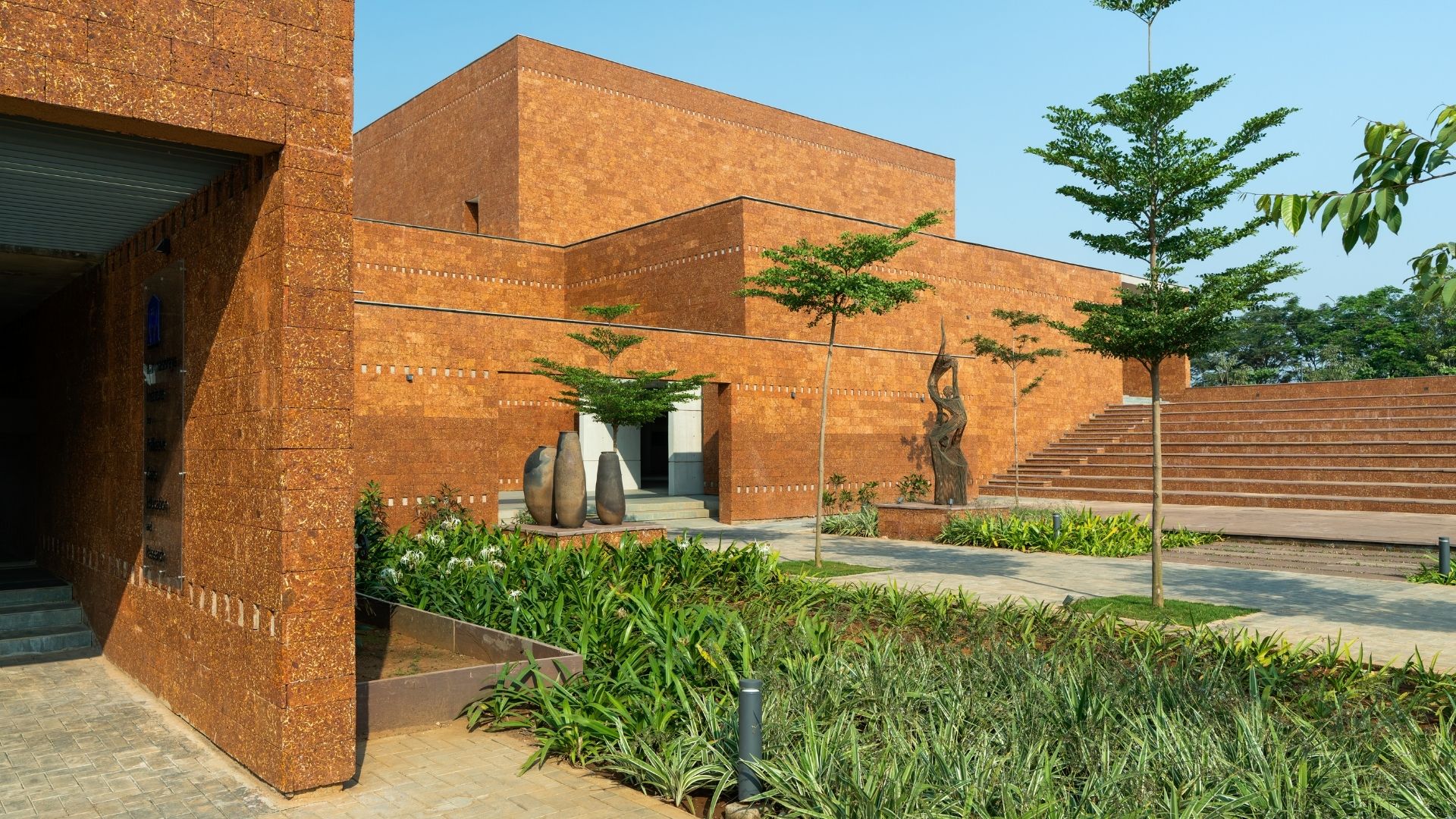
Medappa also reflects on their longstanding association with the client, spanning over three decades. “Because of our earlier collaborations in Bengaluru, we knew exactly what they wanted here,” he says. The vision was to build a hospice campus on 20 acres with facilities for over 100 patients, supported by nearly equal nursing support, alongside an outpatient department, counselling spaces, staff housing, cafeterias, a learning centre, and an auditorium. Built on what was once a laterite quarry, the campus carries an earthy character that flows into all the spaces through laterite finishes, calm, flowing water ponds, and locally inspired artwork.
Raymond V. Soans, Director of Sales and Marketing at Sigma AVIT, recalls how it all began. “When I first walked in, I thought it was a resort – it was so beautiful; it didn’t feel like a hospital at all. But once they explained how they care for patients in their final days, giving them as much happiness as possible, it really stayed with me.” When it was time for Raymond to present his proposal, he was clear. “We’re not here just to do business. We’ll show you our technical capabilities, and if you feel we’re the right company, choose us. But, we want to be part of what you are doing.”
Technology by design
For Gurmeet Randhawa, Managing Trustee at Bangalore Hospice Trust, the project’s success lay in seamless collaboration and meticulous execution. Recalling how Raja worked closely with Medappa and his team, he says, “It became a seamless interaction in terms of design.” As a campus dedicated to palliative care and palliative medicine, the intent was to create an atmosphere where patients could spend their last days with dignity.
“We have a strong research and education department, and we do a lot of training for doctors, nurses, and counsellors,” he adds, noting that the auditorium, which integrates naturally with the wards and surrounding buildings, plays a central role here.
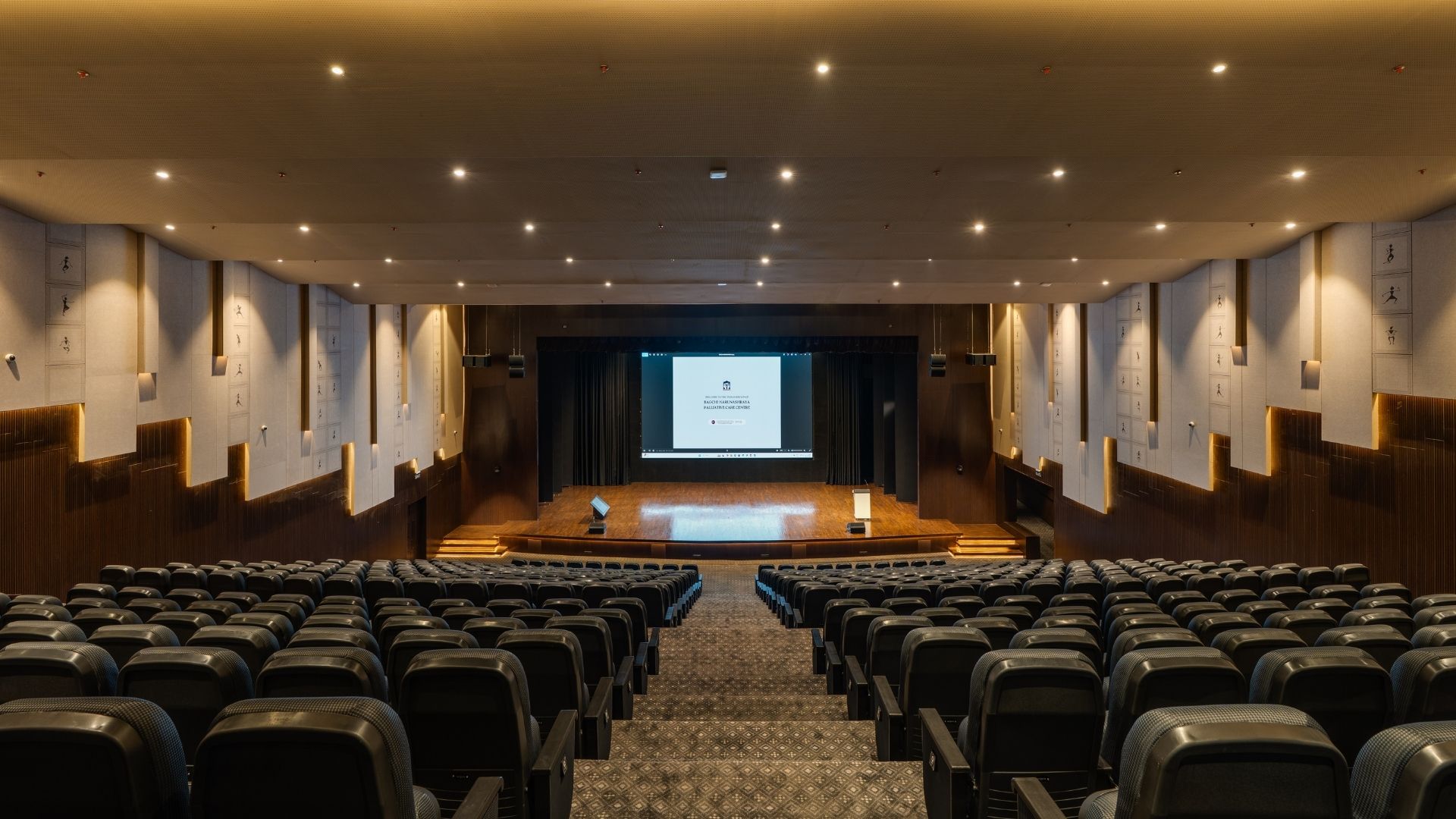
A fully integrated AV environment, the 500-seater auditorium is a versatile space that hosts seminars, internal cultural programs, and also performances by artists such as Odissi dancer Ileana Sitalisti. “It has been well appreciated for its sound, lighting, and overall production quality,” says Gurmeet. “We were looking at perfection and wanted the best of AV for the auditorium,” he adds, expressing satisfaction with the outcome and acknowledging iHD Ltd.’s support from AV design and vendor selection to final installation and testing.
Medappa adds that since the institution runs entirely on donations, it could also function as a revenue-generating space when rented out. “It had to be a state-of-the-art auditorium, which Raja and the team went beyond to support with strong technical expertise, approaching it as more than just a commercial project,” he adds.
“It’s a very special space for them,” emphasizes Raja, explaining that the design prioritises a stereo stage configuration over surround sound, to ensure audio is neither too loud nor too subdued, just aptly designed for the space. From the outset, the client was clear about their technology requirements, he notes. “They identified where data connectivity and Wi-Fi were required, marked high-security zones, and trusted us to translate these needs into an integrated technology framework that supports both operations and everyday campus life.”
“When it came to the auditorium, they gave us a free hand. They said: ‘We want one of the finest auditorium experiences in this region – you
decide what’s best for the space,’” he recalls, as he underscores the seamless integration of technology into the architecture. “Nothing feels like it was added later. From lighting to acoustics, everything is integral to the original design language. Even the decorative wall prints are produced on acoustic material by Anutone, balancing aesthetics with performance.”
Acoustics first
When the team first evaluated the empty auditorium shell, the reverberation time (RT60) exceeded 7.5 seconds, and the target was to bring
it down to 1–1.2 seconds. “It’s always the space first, then the technology. If the room doesn’t support the sound, even the best speakers won’t perform.” Raja explains.
Nearly 80 per cent of the side walls are acoustically treated, with additional absorption on the rear wall and a non-reflective surface behind the screen. The designer ceiling integrates acoustic materials, including NRC 0.65-rated boards, while the floor is fully carpeted, and wall contours and wedges are engineered as per acoustic requirements.
Medappa adds that every element from the carpet to the wall panels was carefully detailed to reflect a regional influence. “We involved local
art forms and adapted them into a digital format, which was then printed onto the acoustic panels.”
Sound Clarity without clutter
“The client was clear: they wanted crisp sound with exceptional clarity, without too many speakers, and no delay stacks,” Raja points out.
The system features two left and right line-array stacks, each featuring Tannoy VX12Q FOH loudspeakers paired with a Tannoy VSX12.2BP subwoofer. Supporting the main system are four Tannoy VX6 front-fill speakers placed along the front of the stage, and two portable Turbosound TFX152M-AN stage monitors, which can be repositioned to suit different event formats.
Powering this set-up is a Lab Gruppen D40:4L Dante-based amplifier platform. Audio inputs, including Audio Technica microphones, are routed through a Behringer S32 stage box into a Behringer X32 mixing console, with signal processing via a Klark Teknik DM8500 DSP. A Netgear GSM4328PA switch forms the Dante network backbone.
“We achieved high intelligibility with fewer speakers, which was important for the client,” Raja notes. “At the same time, the system is futureready, with provisions for expansion, including potential surround sound integration.”
Explaining the selection process, he remarks, “After extensive evaluation and comparative modelling, Tannoy proved to be the best fit, balancing performance with budget. It delivers exceptional clarity and intelligibility with fewer speakers, which was a critical requirement.”
Visuals and collaboration
The main stage display is a Unilumin Kslim LED wall with a resolution slightly above the standard 1080p and 1280 pixels vertically, delivering an exceptionally crisp, high-resolution visual experience, Raja explains. Backend switching runs over AVoIP using Lindy solutions, integrated with a Kramer VIA Connect² presentation system for seamless content sharing. The setup also includes three Lumens VC-A61P PTZ cameras with 30× optical zoom, connected to a Lumens LC200 recorder for reliable capture and content management.
For video conferencing (VC), the output is routed through an Inogeni Share 2 system, enabling smooth integration with UC-based platforms like Microsoft Teams and Zoom via a PC. Additionally, two 15-inch Turbosound TFX152M-AN stage monitors provide flexible on-stage audio support. Outside the auditorium, two 55-inch and one 75-inch LG displays broadcast live events in the lobby area.
“The stage lighting design was developed by us in-house to support diverse event formats,” says Raja. Controlled through a Canara lighting console, the setup includes moving heads, RGB PARcans, wash lights, flashers, and a motorized drape system with three adjustable light bars, allowing the stage to be reconfigured for different formats.
Controls
The system is built on a Kramer Electronicsbased control architecture, powered by a Brainware processor integrated with the SL280 backend and operated via an iPad. “This configuration was selected based on cost considerations while still meeting all operational requirements effectively,” says Raja.
AV is controlled via a single panel, architectural lighting through wall controls, and stage lighting from a console with presets for non-technical users. The system can be operated from the control room or from the stage pit, where the Behringer X32 mixer can be positioned for full live-show control. “It’s been designed as a fully indoor solution, with input provisions at the floor, podium, and control room, along with integrated VC and wireless presentation capabilities,” he elaborates.
Accessibility is central to the design. In standard mode, touch screen presets automatically configure audio and visual settings, and the advanced mode gives experienced audio professionals complete flexibility during live events.
Raja adds that the auditorium integrates seamlessly with the wider campus. “Since we handled the IT backbone as well, we enabled full connectivity between the auditorium and other spaces. Any video played here can be transmitted as an AV-over-IP signal to areas such as the training centre, in real time.”
Dedicated transmitters and receivers support live streaming across the facility, allowing knowledge-sharing sessions, training programs, and events to extend beyond the hall itself. “This was an additional requirement from the client, and we ensured the necessary infrastructure was embedded into the design from the beginning,” he explains.
A commitment that continues
Originally planned for completion within 18 months, the project finally took 36 months due to factors like heavy rains, soil conditions, and the site’s remote location, but as Raymond aptly reflects, “We all went the extra mile to ensure the success of this project. More than the project, it is the relationship that matters; that’s what we built, and that’s what continues.”
Today, the Bagchi Karunashraya Palliative Care Centre is a powerful example of how architectural design in harmony with nature and thoughtfully integrated technology can radiate healing, hope, and positivity. In a hospice committed to dignity and compassion, technology is playing a larger role by enabling connection, learning, and community at a time when people need it the most.