Author: Rishubh Nayar, Sales Director, Christie Digital Systems (India)
Screens are everywhere in India. Just walk through any large mall, airport terminal, or metro station today and you will find yourself between screens with displayed information. They guide passengers, promote brands, share public information, and increasingly shape people’s spatial experience.
It is no surprise, then, that India’s digital signage market has crossed the USD 1 billion mark, while showing no signs of slowing. However, while demand for digital displays is rising, much of the underlying display infrastructure has not kept up.
Many high-visibility environments still depend on outdated projection systems or tiled LCD (Liquid Crystal Display) screens solutions that were not built to withstand India’s challenging lighting conditions, extended operating hours, or the demands of high-traffic public spaces.
Legacy Display Systems Under Pressure
Projection and tiled LCD systems perform adequately in controlled indoor settings, but they can struggle under extended operating hours, high ambient lighting, and continuous public usage typical of India’s busiest environments.
For instance, projectors can lose brightness in well-lit spaces and need regular lamp and filter replacements. LCD video walls, though commonly used, bring their own issues—visible bezels, uneven brightness, colour variations, and occasional pixel failures—that break visual continuity and lessen overall impact.
In retail spaces, dim or uneven visuals can weaken carefully designed brand experiences. In busy transport hubs like airports and metro stations, even brief drops in clarity or downtime can disrupt passenger flow and undermine confidence. Public-sector environments, including command centres and control rooms, depend on uninterrupted, uniform visuals for situational awareness, a requirement that older display systems often struggle to meet consistently.
For facility managers and AV (audio visual) teams, these limitations mean more time spent on maintenance and less on enhancing the user experience. Across retail, transport, the public-sector, and corporate spaces, it’s becoming increasingly clear that legacy display technologies are being pushed beyond the conditions they were built for.
Shifting to LED Video Walls
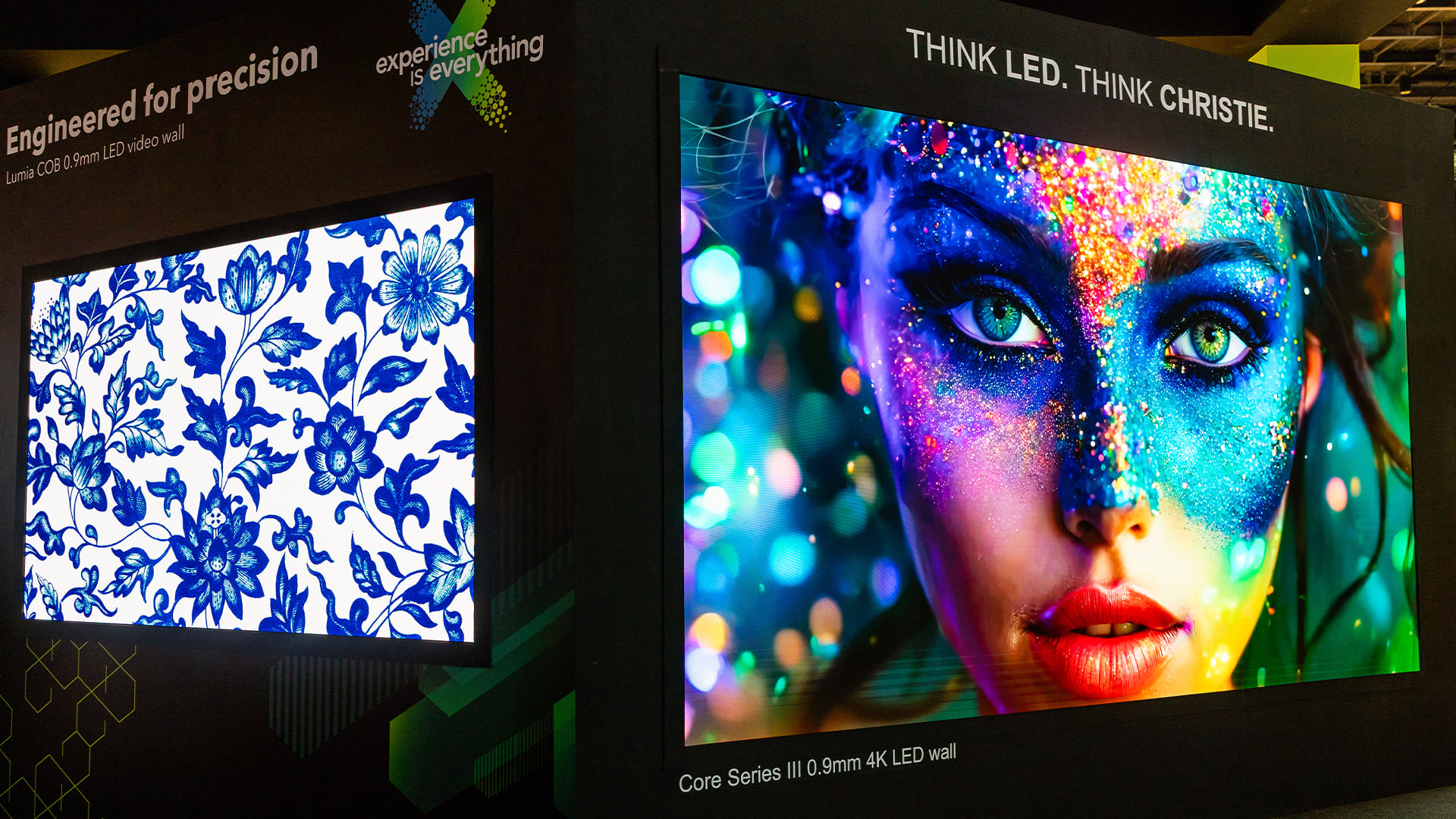
Direct-view LED (Light-Emitting Diode) video walls are designed to meet these challenges head-on. Made up of large, seamless displays constructed from individual LED panels, where tiny Red, Green, and Blue (RGB) LEDs serve as the actual pixels, they deliver exceptionally bright, high-contrast images with vivid colors. By eliminating bezels, these video walls support massive, scalable sizes suitable for both indoor and outdoor applications. Their modular construction and front-serviceable panels make maintenance quicker and less disruptive, an important advantage for large venues where access and uptime matter.
With high brightness, strong contrast, and seamless, bezel-free surfaces, LED video walls keep content clear and engaging, even in brightly lit environments. Improvements in energy efficiency, heat management, and system design have also made modern LED solutions more reliable and cost-effective to operate over their full lifecycle.
Equally important is flexibility. LED technology allows organisations to scale performance according to application needs. Premium platforms such as Christie MicroTiles LED are often deployed in flagship spaces and experience centres, where seamless visuals, design freedom, and high visual uniformity support immersive storytelling.
For many corporate, government, and education environments, practical considerations tend to outweigh spectacle. In these settings, ease of installation, front-access maintenance, and adaptability to on-the-ground deployment conditions are often key requirements. Flexible system configurations and compatibility with existing processing infrastructure allow LED displays in this category to support a wide range of content types and viewing scenarios, making them well suited to everyday operational use.
In more cost-conscious deployments, the focus often shifts towards reliability and consistency rather than maximum visual impact. LED displays used for digital signage, auditoriums, and operations centres are typically designed to perform well at wider viewing distances, delivering seamless visuals and stable image quality without unnecessary complexity. This approach allows organisations to achieve a workable balance between performance, durability, and long-term value across everyday large-format applications.
For close-viewing and interactive applications, visual precision becomes a priority. LED displays designed with finer pixel densities support environments where detail, clarity, and visual uniformity matter most, particularly when content is viewed at short distances. These systems are typically engineered for consistent performance and reliability, making them suitable for settings that require continuous operation and sustained image quality.
From Visual Enhancement to Critical Infrastructure
India’s digital display landscape is no longer driven by visual enhancement alone. Across retail environments, transport hubs, and public-sector spaces, screens have become essential infrastructure supporting real-time information flow, guiding movement, reinforcing trust, and enabling operations at scale.
As retail spaces grow more immersive, transport hubs have become more data-driven, and public environments more connected, visual communication is taking on a critical operational role. In this context, LED video walls offer a display foundation designed for India’s realities: high ambient light, continuous usage, heavy footfall, and the need for long-term reliability.
For decision-makers, the shift to LED reflects a broader reassessment of display strategy. Clarity, continuity, and uptime are no longer aesthetic considerations, they are operational requirements. As India’s public and commercial spaces continue to modernise, LED video walls are increasingly shaping how information is delivered, experiences are sustained, and environments perform day after day.