

In the world of professional audio, technology evolves at an incredible pace. New formats, smarter amplification, networked control, and increasingly sophisticated loudspeaker designs enter the market every year. Yet despite all this innovation, the core expectations of professional audio have remained remarkably consistent.
Whether you’re designing a live music venue, upgrading a hospitality space, integrating sound into a corporate environment, or building a system for worship, retail, or entertainment, one fundamental question drives every decision, Professional audio is not defined by products alone. It is defined by outcomes. It’s about how sound behaves in a space, how reliably it performs over time, and how seamlessly it supports the purpose of the environment. Ultimately, professional audio exists to create experiences, experiences that are heard, felt, and remembered.
So what truly matters when choosing professional audio solutions today?
Sound Quality That Speaks for Itself.
At the heart of professional audio is clarity. The best systems don’t draw attention to themselves. They allow the content to shine. Whether it’s a live band, a keynote speaker, background music, or an immersive soundtrack, sound should feel natural, balanced, and effortless. Every frequency should be represented accurately, without harshness, muddiness, or distortion.
Professional sound quality is about faithful reproduction. What comes out of the loudspeakers should match what went in, preserving tonal
balance, dynamics, and detail. This matters just as much in a small cafe as it does in a large arena. In fact, in intimate spaces, poor sound quality is often more noticeable.
Good sound enhances emotion. It supports storytelling. It keeps listeners engaged rather than fatigued. When audio quality is right, people
don’t talk about the system. They talk about the experience.
Consistency Across Every Seat
One of the most important markers of a truly professional system is consistency.
In real-world spaces, listeners are rarely positioned in the “perfect” spot. They move, they sit at different distances, and they experience
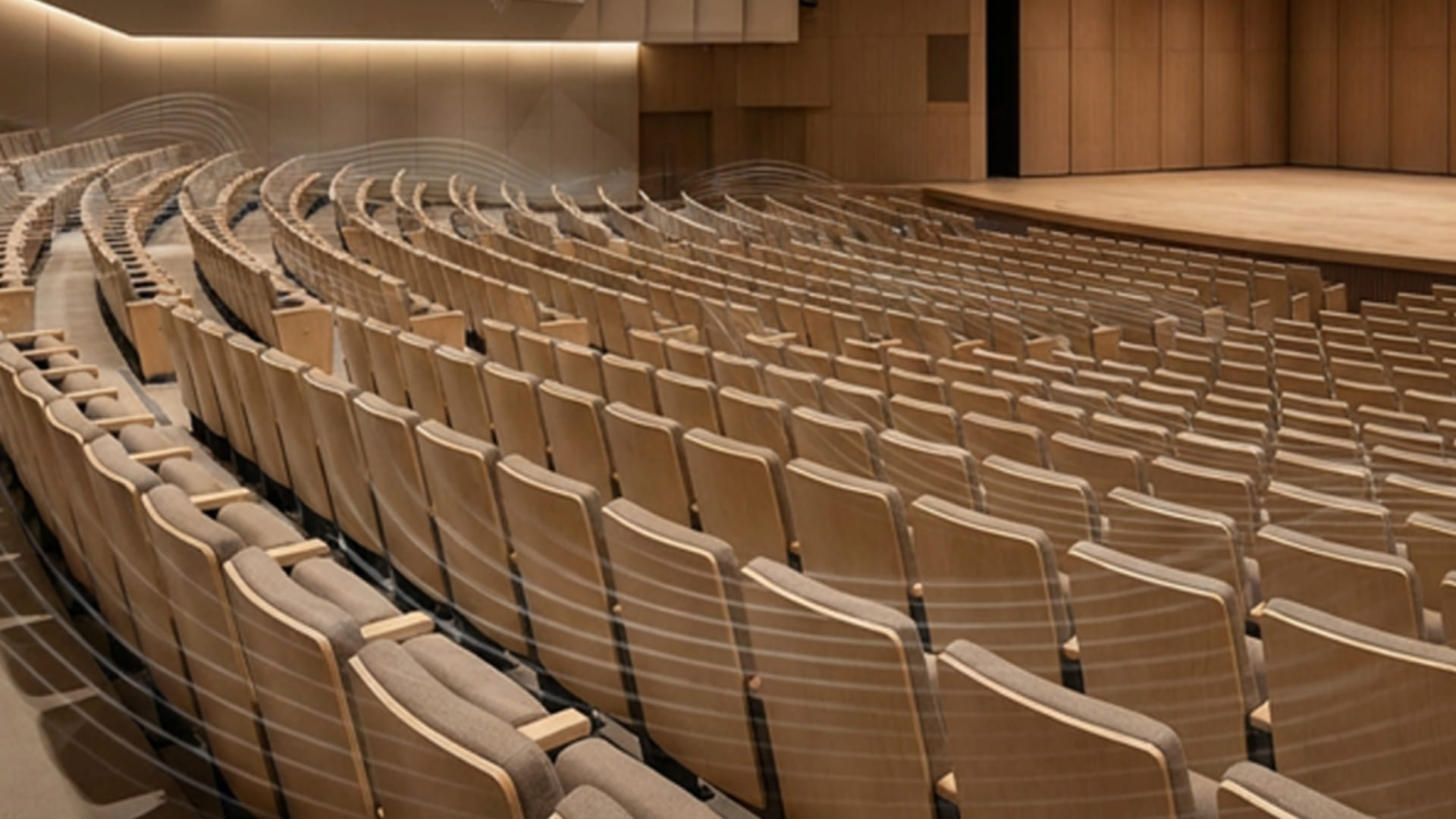
sound from various angles. A professional audio system ensures that a listener in the front row has a similar experience to someone at the back or off to the side. Achieving this requires more than powerful equipment. It demands controlled dispersion, predictable coverage patterns, thoughtful system design, and accurate modelling and tuning. These elements work together to create uniform sound coverage that ensures intelligibility, musical balance, and comfort throughout the venue.
When every seat becomes a “sweet spot,” the space feels intentional and well designed. This consistency is what separates consumer-grade
solutions from professional ones.
Reliability You Can Trust
In professional environments, failure is not an option.
A system that sounds great but fails during an event, service, or business operation quickly loses its value. Downtime is costly, not just financially, but reputationally. This is why reliability is a non-negotiable requirement in professional audio. Top-tier pro audio equipment is engineered to perform under demanding conditions, long operating hours, high output levels, challenging environmental factors, and continuous daily use. Stable amplifiers, robust transducers, thermal protection, and intelligent monitoring are all part of this reliability equation.
Equally important is the brand behind the product, its track record, global support network, and commitment to long-term service. Professionals don’t just buy equipment; they invest in confidence.
Ease of Integration & Control
Modern spaces demand flexibility, and professional audio systems must adapt accordingly.
Today’s environments, restaurants, hotels, stadiums, houses of worship, corporate offices, and mixed-use venues, require systems that are easy to deploy, intuitive to operate, and scalable for future needs. Audio should integrate seamlessly with lighting, video, automation, and IT
infrastructure.
This is where modern pro audio truly shines. IP-based control and audio networking, remote monitoring and diagnostics, centralized system management, and user-friendly control interfaces all combine to create solutions that adapt to the unique needs of each space. For integrators and end users alike, ease of control reduces complexity, minimizes errors, and ensures consistent performance. A well-designed system empowers operators rather than overwhelming them, allowing technology to stay in the background where it belongs.
System Design That Fits the Purpose
The “best” audio system is not the one with the biggest specifications. It’s the one that is right for the application.
Professional audio is as much about design as it is about equipment. Room acoustics, ceiling height, audience layout, ambient noise, and architectural constraints all play a role in determining the optimal solution.
Intelligent system design considers loudspeaker placement and orientation, acoustic treatment and reflections, power requirements and headroom, as well as content type and usage patterns. Each of these factors contributes to a solution that feels natural in its environment.
A well-designed system supports the purpose of the space rather than fighting against it. This application-first mindset is what defines professional audio engineering and separates thoughtful solutions from generic installations.
Value Beyond the Purchase Price
Professional audio is an investment, not an expense.
Decision makers today are increasingly focused on long-term value rather than upfront cost. A cheaper system that requires frequent maintenance, replacement, or compromises performance quickly becomes more expensive over time.
True value comes from energy-efficient amplification, low maintenance requirements, long product lifecycles, and consistent performance year after year. Systems that are designed well, installed properly, and built with quality components deliver a stronger return on investment.
They reduce operational headaches, extend usability, and maintain sound quality long after installation. In professional audio, value is measured over years, not invoices.
And Ultimately, the Experience
At its core, professional audio is not about technology, it’s about emotion. It’s the moment when the bass hits with impact but control. When a speaker’s voice cuts through clearly in a crowded room. When a venue feels alive, immersive, and engaging.
Sound shapes how people feel in a space. It influences mood, attention, and memory. This emotional connection is what transforms “sound” into professional audio. When everything comes together, clarity, consistency, reliability, control, and intelligent design, the result is an experience that feels effortless and powerful.
Whether you’re a system integrator, sound engineer, consultant, architect, or venue owner, what we really look for in professional audio is
surprisingly simple, Clarity. Consistency. Reliability. Control. Long-term value. And above all, an experience that resonates with every listener. If your audio system can deliver these elements, day after day, seat after seat, then it is not just sound. It is truly professional audio.

Keith Lobo
Keith Lobo is a marketing and branding professional with over 20+ years of experience, backed by a diverse background spanning IT, professional DJ’ing, and audio technology. Over the past five years, he has worked as an audio consultant, combining technical expertise with strategic marketing insight. Most recently, he co-founded AuralEdge Technologies Pvt. Ltd., further strengthening his footprint in the professional audio industry.
AuralEdge Technologies Pvt. Ltd. is a professional audio-video solutions company that delivers end-to-end consultancy, advisory, and system integration services.


