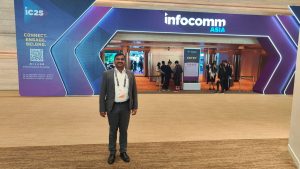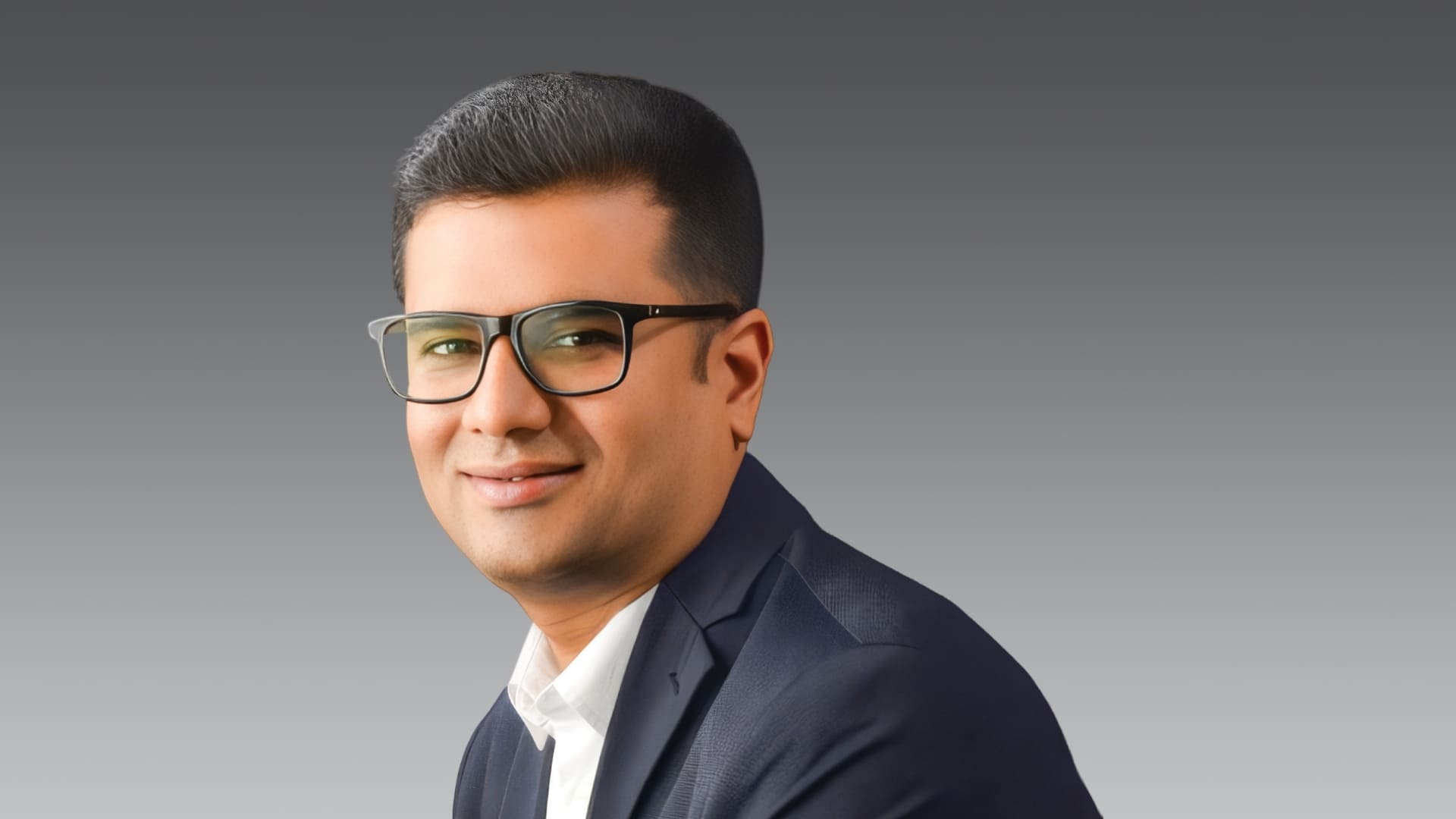
After 81 years as a family-owned company, Sennheiser has merged its business communications and professional audio divisions into a single organisation. Naveen Sridhara, who now leads the combined India operation, explains what this means for customers, partners, and growth.
When a Global Capability Center (GCC) asks Sennheiser for a boardroom solution, there is often a podcast room or media studio down the corridor. Until recently, those conversations were handled by two different divisions. Today they are handled by one.
“For the customer, Sennheiser is one brand,” says Naveen. “It shouldn’t matter to them whether we are in professional audio or business communication internally.” Sennheiser has defined four focus segments: Live and Rental, Broadcast and Recording, Corporates, and Higher Education. In his words, these are “where we can play and where we can win.”
Leading through change
He admits taking on the expanded role was overwhelming at first, but he sees it as the logical next step after three and a half years in his previous role. “Nothing changes if nothing changes,” he says. “We always have to challenge the status quo, as an organisation and as an individual.”
He says “Sennheiser’s culture made the transition manageable. Even as a global brand, we are still a family, with clear leadership and support systems backed by HR, finance, and operations to ensure a smooth flow of business.”
Spectera convenience as the product
Few launches have drawn as much attention in AV as Spectera, Sennheiser’s digital wireless system, showcased at PALM Expo. Naveen calls it the most unique wireless offering in the industry, and Sennheiser was the first to market.
It earned its credentials in live events. The Eurovision Song Contest ran entirely on Spectera, a deployment of well over 100 wireless channels. Artists adopted it quickly because it was convenient.
Sixty-four channels that once filled racks now fit in a single rack space, and antennas, splitters, and amplification are eliminated. Setup takes five minutes: power on, connect a CAT5 cable, and the built-in spectrum analyser automatically tunes the system. “Earlier, setup used to take half a day to one day,” he says. That simplicity opens up a second audience. Corporate event spaces seating 3,000 to 4,000 people and houses of worship rarely employ RF specialists. “For them, a microphone is a microphone,” Naveen says. Feedback from PALM Expo visitors praised the system’s flexibility and audio quality, which he calls Sennheiser’s first priority.
Where India’s growth is coming from
Naveen first points to GCCs. India has roughly 1,400 to 1,500 of them today and is expected to reach about 2,400 by 2030, with Bengaluru, Hyderabad, and Pune as anchors. The opportunity extends beyond boardrooms and ceiling microphones. Corporates now book top artists for annual days and employee engagement events, driving demand in the rental segment as well. International tours and local performances add to it.
The second major opportunity is in higher education. As foreign universities establish campuses in India, studying at a globally recognised institution becomes far more affordable than paying $200,000 to $300,000 to study abroad. These campuses will need AV infrastructure that matches their reputation.
Growing the market, not chasing the number
Sennheiser’s key priority for 2026 is a restructured distribution model, effective September 1. Its own team will work directly with a limited set of large accounts, while distributors handle the broader base of channel partners. In professional audio, where products start at around ₹3,000 to ₹4,000, distribution is the only practical approach.
“Numbers have to be done; that’s fine,” Naveen says. “But if you work on the numbers, it’s hit or miss. If you work on market potential, the numbers will follow.”
The road ahead
Sennheiser is marking its 81st year by simplifying: one brand for customers, four focus segments, and partners to scale its reach. For India’s integrators, rental houses, and enterprise buyers, the message is clear. Sennheiser is not just selling microphones. It sells the confidence that the sound will work and that setup will take minutes, not a day.