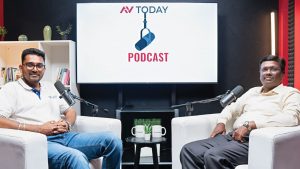
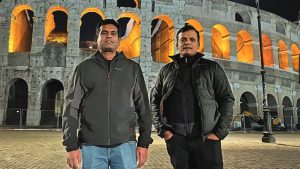
AV Today spoke with David Neaderland, founder of Sound Control Technologies (SCT), at the company’s booth during InfoComm India 2026. SCT has just completed 39 years and is heading toward its 40th. The founder reflected on how the industry has changed and discussed what comes next for India.
From analog beginnings
When SCT started in 1987, the conferencing industry was barely established. “Everything was analog,” David recalls. “There was no Ethernet transmission. There weren’t any commercial video conferencing systems. Codecs didn’t exist.”
In the late 1980s, the job was to persuade end users to install audio conferencing in their meeting rooms. SCT built many of the first telephone hybrid interfaces and acoustic echo cancellers for room integration. Much of the early work, David explains, was teaching customers what conferencing could do for their people when they needed to communicate beyond their own offices.
Early video hardware was enormous. “The first video conferencing codecs were the size of refrigerators, and each conference room cost over a million dollars,” he says. COVID permanently changed the market: everyone knows they can video call on their phones. “Now it’s not whether they’re going to, but how much, how many, and how extensive the technology they’re going to deliver in each room is.”
Growing roots in India
SCT has operated in India for over a decade, first serving multinational technology adopters that introduced the brand. David credits Sushant More, SCT’s champion in India and the Middle East for over 11 years, with building its domestic business. “It’s been a very rewarding journey,” he says, “and it has put us in a good position for forward-looking opportunities.”
David says family has been a core company principle from day one. “We view our customers, our partners, and the consultants who work with us as an extension of that family. We rely on mutual trust and confidence, and Sushant has exemplified that.” Sushant has built strong relationships with end users, consultants, integrators, and manufacturers, and is developing a local team. “I have grown because of him; he has grown because of us, and we really enjoy working in the Indian marketplace.”
Linking legacy rooms with BYOM
Meeting rooms are adopting Bring Your Own Meeting (BYOM), with USB-C as the universal connection. Integrators still face distance, power, and signal-integrity challenges. David says SCT addresses them through another core principle: sustainability.
“As technology evolves, we aim to give people time to extend the life of existing investments, whether in SCT infrastructure or other systems,” he explains. The USB-PDI, for example, delivers USB, HDMI, and power to a laptop through one USB-C connection and adapts existing table interfaces from almost any manufacturer. “Of course, it’s much better if they have SCT infrastructure, but we understand that not everyone has that luxury.”
The roadmap ahead
Rooms now need PTZ cameras, ceiling microphones and collaboration bars to work together. Asked what comes next, David laughs: “That literally is a million-dollar question!” He says hardware makers often follow platforms like Microsoft, Zoom and Cisco Webex. SCT aims to lead with technologies that bridge platform gaps, expanding R&D and engineering teams across countries to bring diverse perspectives and build for every market.
Plans for India
What does the 40th year hold for India? “We are actively looking to expand our footprint in India,” David says with a wink. He calls India a growing, maturing market that the rest of the world continues to invest in, “as will we.” He adds: “We enjoy coming to InfoComm every year. It’s been a good market for us, and we hope we are good to it as well.”