
The Indian Pro AV market is undergoing an extraordinary, unprecedented expansion. Driven by rapid corporate real estate development, a massive push toward hybrid workforces, and experiential retail transformations, the demand for complex, integrated AV environments has reached an all-time high. From corporate boardrooms in the tech parks to high-end command centers and educational institutions, technology is no longer an afterthought; it is the central nervous system of modern infrastructure.
Yet, beneath this facade of soaring demand lies a structural paradox. While system complexity and engineering requirements have climbed exponentially, the operating margins of the very companies designing and deploying these systems are being aggressively squeezed.
The culprit is a familiar, systemic challenge: The race to the bottom on pricing.
In a highly competitive landscape, many system integrators and technology providers have defaulted to price-cutting as their primary tool to secure contracts. While this strategy might secure a short-term win on paper, the long-term consequences are eroding the financial health of the integration ecosystem, stalling professional talent development, and, most critically, harming the very clients we seek to serve.
It is time for a collective pivot. The Indian AV industry must transition from a cost-plus, commodity-driven pricing model to a value-based partnership framework.
The illusion of the “Desperate Win”
At first glance, procurement-driven bidding seems to function exactly as designed: intense competition drives down capital expenditure (CapEx) for the client. But in specialized B2B technology integration, lower hardware costs are almost always an illusion.
When an integrator slashes their pricing by 10% to 15% under pressure, that margin has to be recovered elsewhere. Because hardware costs are fixed by manufacturers, the cuts inevitably fall on soft services: certified engineering hours, comprehensive system testing, custom programming, acoustic tuning, and post-installation support.
The result is a project that looks compliant on a spreadsheet but underperforms in reality. Microphones fail to auto-track because custom digital signal processing (DSP) programming was rushed; video walls experience sync issues because high-grade certified cabling was swapped for a cheaper alternative to save on margins; corporate executives waste the first ten minutes of every board meeting troubleshooting connectivity.
“We must ask ourselves: is a 10% savings on capital hardware worth a 100% loss in executive productivity during a critical global meeting?”
When we lower our price without altering the scope, we inadvertently teach the client that our original pricing was arbitrary, and that our engineering, design, and programming services are worth zero rupees.
The root cause: Selling boxes, not business outcomes
Why does this cycle persist? It stems from a fundamental disconnect in how AV systems are packaged and presented to the market. Historically, the Pro AV industry grew out of hardware sales. Integrators were seen as “box sellers” who plugged devices together.
But modern AV is no longer about boxes; it is about communication, collaboration, and human experience.
THE COMMODITY TRAP vs. THE VALUE PARTNERSHIP
When an integrator submits a bid that is simply a long list of model numbers and individual prices, they invite procurement teams to treat them like a supermarket. Procurement’s job is to look at that list, find the exact same model numbers from three different bidders, and award the contract to the cheapest supplier.
To break this cycle, the conversation must shift from what the system is (hardware specifications) to what the system does (business outcomes).
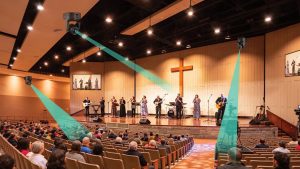
For example, an enterprise client does not buy “twenty ceiling array microphones and a digital matrix switcher.” They buy “frictionless, high-clarity hybrid collaboration that allows their regional directors to make decisions without delay.” When an integrator can articulate, quantify, and guarantee that specific business outcome, the price of the individual components becomes secondary to the solution’s value.
Reclaiming the value of human capital
One of the most critical steps in shifting from a price-driven to a value-driven approach is decoupling professional services from hardware procurement.
The intellectual property of an AV integrator or consultant- the acoustic modeling, network design, CAD layouts, custom software code, and system commissioning is highly specialized engineering work. Yet, this human capital is routinely bundled as “complementary” or “free of cost” within a hardware quote.
By explicitly line-iteming professional services, integrators achieve two major goals:
- They anchor their value in expertise, not plastic and glass. Even if a client finds a cheaper source for a projector, they cannot replicate the certified engineering required to integrate it seamlessly into a complex corporate network.
- They insulate their businesses from hardware margin fluctuations. In an era of shifting global tariffs, supply chain bottlenecks, and volatile exchange rates, relying purely on hardware markups to fund high-cost engineering talent is a highly risky business model.
Establishing “Co-opetition” and industry standards
This transformation cannot be achieved by a single player acting in isolation. If one integrator holds their price on value while three competitors continue to undercut, the system remains broken. The industry needs a healthy dose of “co-opetition”, a state where competitors aggressively contest the market on merits, but collectively maintain a high floor for quality and professional standards.
Industry associations, leading consultants, and project management firms (PMCs) play a crucial role here. PMCs and architects are beginning to recognize that choosing the lowest bidder often introduces immense operational risk to their projects. When an integrator misses a deadline or delivers a substandard system, it reflects poorly on the entire project management chain.
By setting minimum standards for certified engineering, requiring specific professional credentials (like AVIXA CTS, CTS-D, or manufacturer-specific certifications) on bid submissions, and refusing to accept quotes that clearly underprice labor and commissioning, we create a rising tide that lifts all boats.
The path forward: A call to business leaders
Shifting the Indian AV industry from price-driven to value-driven is not a luxury; it is a necessity for long-term survival.
It requires business heads to invest heavily in their teams’ commercial and negotiation skills. We must train our sales forces to stop leading with discounts. We must equip our account managers with the tools to build Total Cost of Ownership (TCO) models that prove to CFOs why a premium, expertly engineered system is significantly cheaper over a five-year lifecycle than a compromised, cut-rate installation.
Most of all, it requires commercial confidence. It requires the courage to look a client in the eye and say: “We are not the cheapest option, and we are proud of that. Because our price reflects the engineering integrity, the security, and the reliability that your business requires to succeed.”
The transition from box-selling to value-partnership will not happen overnight. But as technology complexity continues to accelerate, those who anchor their business models in intellectual value and professional execution will thrive. Those who rely solely on the thin margins of undercutting will find themselves running out of runway.
Let us stop fighting over who can charge the least, and start collaborating on how we can deliver the most.